
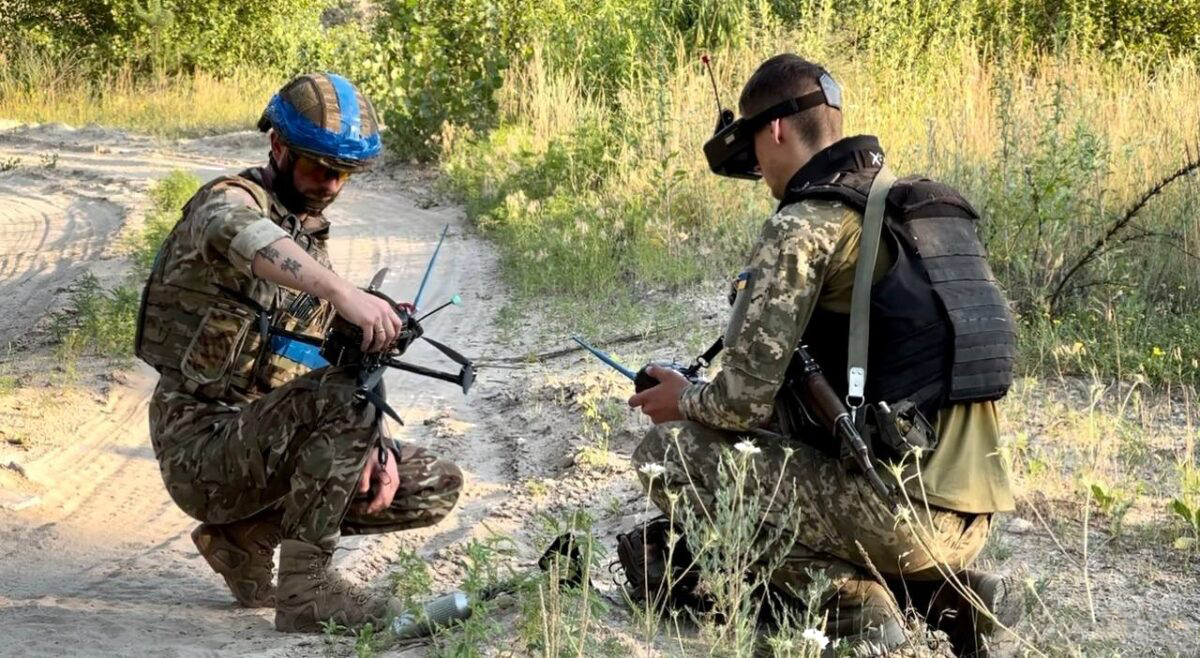
In February 2022, Russia's full-scale invasion was accompanied by expectations that Kyiv could fall within days. Now, 1,727 days later, Ukraine is not only continuing to resist but is also launching massive strikes deep inside Russian territory. Overnight on November 16, Moscow claimed to have intercepted 1,336 Ukrainian drones. Yet behind Kyiv's military achievements lies another reality: a shortage of soldiers, disputes over mobilization, public protests, and growing pressure on President Volodymyr Zelenskyy.
KYIV / MOSCOW | November 16, 2026 — WE PNW
Why Does This Matter, and What Are the Consequences of a Prolonged War?
Russia's war against Ukraine is approaching its fifth anniversary, and the nature of the conflict has changed dramatically.
Russian forces failed to capture Kyiv during the opening weeks of the invasion. Ukraine preserved its independence, maintained its armed forces, and developed the ability to strike targets far beyond the front lines.
However, neither side has achieved a decisive military victory.
Russia continues offensive operations and attacks on Ukraine's energy infrastructure. Ukraine responds with strikes against Russian military facilities, oil refineries, and transportation networks.
For civilians, this means continued destruction, the threat of further attacks, and disruptions to electricity and heating, particularly as winter approaches.
For the international community, it means a prolonged conflict affecting European security, global energy markets, and relations among major world powers.
Recent developments suggest that despite diplomatic efforts, there is still no clear end to the war in sight.
More Than 1,300 Drones in One Night: What Happened on November 16?
Overnight from Sunday into Monday, Ukraine carried out one of the largest aerial operations against Russian territory since the beginning of the full-scale invasion.
According to Russia's Ministry of Defense, air defense systems intercepted 1,336 Ukrainian drones across 16 regions.
If accurate, this would represent a record number of drones reported intercepted by the Russian military in a single night.
The previous record, according to Russian figures, was 1,254 drones on October 29.
Reuters and the Associated Press emphasized that the Russian figures could not be independently verified.
Furthermore, the number of claimed interceptions does not establish exactly how many drones were launched or how many reached their targets.
Moscow Mayor Sergei Sobyanin said approximately 600 drones had been directed toward the Moscow region, with 191 reportedly shot down near the capital.
Russian authorities also reported attacks and damage in other regions.
Crimean Bridge, Oil Refineries, and Industrial Infrastructure
One of the most notable incidents during the overnight attack involved the Crimean Bridge, which connects Russian territory to the annexed Crimean Peninsula.
Russian authorities reported temporary restrictions on road traffic.
The Kremlin described the damage as minor. According to Russian officials, railway traffic continued operating.
No independent assessment of the damage was available at the time of publication.
Reuters also reported fires at industrial facilities in the Rostov region and at a site near Ilsky, where an oil refinery is located.
Russian authorities said six people were injured by falling debris.
In recent months, Ukraine has intensified strikes against Russian oil refining infrastructure.
President Volodymyr Zelenskyy claimed that Ukrainian attacks had disabled more than half of Russia's oil refining capacity.
However, Reuters was unable to independently verify that assessment. Industry sources cited by the agency estimated the reduction in available refining capacity at approximately 30%.
These figures represent different assessments of the attacks' impact and should not be treated as definitively established facts.
From "Kyiv in Three Days" to the Fifth Year of War
On February 24, 2022, Russia launched its full-scale invasion of Ukraine.
Russian forces advanced from several directions, including Belarus, attempting to reach the Ukrainian capital.
During the opening days of the invasion, Western intelligence agencies considered the possibility that Kyiv could fall under Russian control within days.
According to an investigation by The Washington Post, U.S. intelligence assessed Russia's initial plan as an attempt to encircle and capture the capital in approximately three to four days.
The phrase "Kyiv in three days" later became a symbol of the failed expectations of a rapid Russian victory.
However, an important distinction must be made: the phrase is not a verified direct quotation from Russian President Vladimir Putin.
Instead, it became a widely used description of Russia's presumed initial plans and expectations for the offensive.
Those plans did not succeed.
Ukrainian forces resisted the invasion, and Russian troops eventually withdrew from the Kyiv region.
Today, more than four years later, Ukraine's military is capable of striking targets deep inside Russian territory.
This represents one of the most significant changes in the nature of the war.
However, it does not mean Ukraine has overcome all its military challenges.
Zelenskyy Proved to Be a More Resilient Leader Than Many Expected
During the opening days of the invasion, Volodymyr Zelenskyy refused to leave Kyiv and continued leading the country from its capital.
His public addresses, diplomatic efforts, and ability to secure international support became important elements of Ukraine's resistance.
Ukraine maintained functioning state institutions, received extensive assistance from Western partners, and significantly restructured parts of its defense industry.
The development of drone technology has been particularly notable.
Ukrainian units increasingly adopted reconnaissance and attack drones, unmanned naval systems, and domestically produced long-range aircraft.
However, advances in military technology have not resolved one of Ukraine's most difficult challenges: finding enough personnel to sustain the war.
Ukraine's Biggest Military Challenge: A Shortage of Soldiers
Despite advances in drone warfare, Ukraine's armed forces face a serious shortage of trained personnel.
In October, the Associated Press reported that some Ukrainian units were operating at only half their authorized strength.
Soldiers face prolonged deployments on the front lines, limited opportunities for rotation, and a constant need to replace losses.
The problem is compounded by draft evasion, unauthorized absences from military units, and difficulties training new recruits.
According to figures cited by the AP, former Defense Minister Mykhailo Fedorov said in March that approximately two million men were avoiding military service, while about 200,000 service members had gone absent without leave or deserted.
These estimates require careful interpretation. They do not mean that everyone included in those figures is currently being sought by authorities or has the same legal status.
Ukrainian military experts emphasize that the problem is not simply the number of available personnel.
Training quality, military organization, service conditions, and trust between soldiers and commanders are equally important.
Mobilization Fuels Tensions and Protests
The prolonged war has intensified divisions within Ukrainian society.
Mobilization remains an especially sensitive issue.
On November 2, clashes broke out in a suburb of Kyiv between protesters, police, and National Guard personnel.
The confrontation followed social media allegations that mobilized men were being unlawfully detained and mistreated.
According to Reuters, approximately 100 people gathered outside a military facility housing recruits and service members returned after unauthorized absences.
Some protesters clashed with security personnel.
Ukrainian authorities launched an investigation into the incident.
Government representatives said there were indications of a possible organized provocation, while also acknowledging genuine public tensions surrounding mobilization.
The incident demonstrated how sensitive the issue of replenishing Ukraine's armed forces has become during the fifth year of the war.
Zelenskyy's Political Crisis: Protests and Conflicts Within the Government
The Ukrainian president's challenges extend beyond mobilization.
In July 2026, Zelenskyy's decision to dismiss Defense Minister Mykhailo Fedorov triggered protests in Kyiv and other cities.
Fedorov was regarded as an advocate of technological modernization within Ukraine's armed forces.
His dismissal followed disagreements with senior military commanders over reforms to the armed forces.
According to Reuters, more than 1,000 people gathered outside the presidential office in Kyiv, demanding that the personnel decision be reconsidered.
Some protesters criticized Commander-in-Chief Oleksandr Syrskyi, while others expressed dissatisfaction with Zelenskyy himself.
The president explained the personnel changes as necessary to renew the government and its management structure.
These events demonstrate the existence of serious political disagreements within Ukraine.
However, protests against individual decisions made by Zelenskyy do not mean that a majority of Ukrainians oppose the president.
According to Reuters reporting in August, his approval rating remained around 60%.
Ukraine's leadership is therefore facing political pressure, but describing the situation as a complete loss of public support would be inaccurate.
Why Does Ukraine Continue Striking Russian Territory?
Ukraine's strategy of long-range attacks serves several objectives.
One is to reduce Russia's ability to finance and sustain its military operations.
The oil refining industry plays an important role in Russia's economy, fuel supplies, and military logistics.
Strikes against refineries and transportation infrastructure can create additional costs, disrupt supplies, and force Russian authorities to redirect air defense resources.
Another objective is to demonstrate that Russian territory is not completely insulated from the consequences of the war.
However, the effectiveness of these operations cannot be measured solely by the number of drones launched.
What matters most is confirmed damage to facilities, the duration of industrial shutdowns, and the actual consequences for military infrastructure.
Russia Is Also Intensifying Its Attacks on Ukraine
While Ukraine launches strikes against Russian territory, Russian forces continue missile and drone attacks on Ukrainian cities.
Attacks against energy infrastructure pose a particularly serious threat.
As winter approaches, damage to power plants, substations, and heating systems could cause prolonged interruptions to electricity, water, and heating.
On November 16, Ukrainian regional authorities reported that at least three people had been killed in Russian strikes across different parts of the country.
The continuing attacks create the risk of a humanitarian crisis, particularly for families with children, older residents, and people living in damaged residential areas.
Why Has the War Not Ended?
After 1,727 days of full-scale war, Russia and Ukraine remain fundamentally divided over territory, security, and the conditions for ending hostilities.
Russia continues seeking political and territorial concessions.
Ukraine insists on preserving its sovereignty and obtaining security guarantees.
International mediators are attempting to make progress toward negotiations, but recent contacts involving the United States have not produced a substantial narrowing of differences over territorial issues.
Meanwhile, both sides continue developing weapons and launching attacks.
The conflict is increasingly becoming a contest not only between armies but also between economies, technologies, industrial systems, and societies' ability to withstand prolonged losses.
What Happens Next?
The massive attack on November 16 provided another indication of how dramatically the war has changed since February 2022.
Ukraine has preserved its independence and significantly expanded its long-range strike capabilities.
Russia, despite its initial failure to capture Kyiv, continues military operations and maintains pressure on Ukrainian defenses.
However, Ukraine's greatest challenge is increasingly its ability to sustain military operations, replace personnel losses, maintain public confidence, and keep state institutions functioning at the same time.
For Russia, continuing the war means protecting a growing number of facilities on its own territory while absorbing additional economic and military costs.
In February 2022, observers discussed the possibility of Kyiv falling within days. By November 2026, the war has entered its 1,727th day, and its consequences are being felt far beyond Ukraine's borders.
The central question is no longer simply which side can launch the larger attack, but how much longer both countries can sustain a war that has long outlasted the expectations of a rapid conclusion.
WE PNW | Independent News — Portland, Oregon & Vancouver, Washington
This article is based on reporting by Reuters, the Associated Press, The Washington Post, and official statements from the parties involved. Wartime figures that could not be independently verified are attributed to their respective sources.