
More than 18,000 flights canceled or severely delayed, a nearly five-hour nationwide ground stop, another computer failure at United Airlines, and an administration request for an additional $50.1 billion. U.S. air travel is recovering, but the investigation is raising increasingly difficult questions. Federal auditors had warned about the risks of accelerated modernization two months before the crisis.
WASHINGTON / PORTLAND | November 18, 2026 — WE PNW
By Roman Tretiakov | WE PNW
American aviation is gradually returning to normal operations following one of the most significant technology-related disruptions in recent years. But as passengers return to airports and airlines restore their schedules, a debate over accountability is intensifying in Washington.
On November 13, a technical failure at the Federal Aviation Administration (FAA) halted departing flights nationwide for nearly five hours.
Three days later, on November 16, a computer outage disrupted departures at United Airlines.
Officials say the incidents were unrelated. Nevertheless, they have renewed questions about the reliability of America's aviation infrastructure.
Why did equipment modernization coincide with a nationwide ground stop? Why did backup systems fail to prevent the disruption from spreading? And how effectively are federal agencies overseeing contractors responsible for multibillion-dollar projects?
American lawmakers are now demanding specific answers.
Friday, November 13: Nearly Five Hours Without Departures
At approximately 3:30 p.m. Eastern Time, the FAA experienced significant disruptions in the telecommunications network supporting the nation's air traffic control system.
The problem quickly spread across much of the country.
According to the agency, instability affected 17 of the FAA's 22 regional air traffic control centers. Certain radio communication channels and radar data transmission systems were disrupted.
The FAA took an extraordinary step: ordering a nationwide ground stop for departing aircraft.
Planes already in the air continued flying. Air traffic controllers relied on operational communication channels and established safety procedures.
According to the U.S. Department of Transportation, more than 3,500 aircraft were in American airspace at the time.
All landed safely.
Critical operations, including medical flights and certain military missions, continued.
Air traffic began recovering after 8:15 p.m. Eastern Time.
The nationwide departure halt therefore lasted approximately four hours and 45 minutes.
However, restoring the telecommunications network did not immediately return American aviation to its normal schedule.
More Than 18,000 Canceled or Severely Delayed Flights
According to aviation analytics company Cirium, between November 13 and November 15, more than 18,100 flights scheduled to depart from U.S. airports were either canceled or failed to depart within three hours of their scheduled time.
An important distinction: these were not 18,000 canceled flights alone. The figure also includes departures delayed by more than three hours.
On Friday, November 13 alone, the FAA reported approximately 12,462 cancellations, including 9,082 flights operated by major airlines.
The agency emphasized that not every cancellation was directly caused by the original technical malfunction.
The consequences extended far beyond air traffic control centers.
Aircraft could not reach their next destinations on time, crew schedules were disrupted, and passengers missed connections. Airlines had to reposition aircraft and reassign personnel.
Transportation Secretary Sean Duffy estimated that the economic consequences of the crisis could reach billions of dollars. A final assessment of the losses has not yet been released.
What Happened at Portland International Airport?
The nationwide ground stop directly affected the Pacific Northwest.
According to Oregon Public Broadcasting, citing the Port of Portland, 144 flights were canceled at Portland International Airport (PDX) on November 13 alone.
Airport spokesperson Kara Hansen said she could not confirm that every cancellation was directly related to the FAA malfunction.
Passengers faced lengthy waits and last-minute changes to their travel plans.
Some travelers had to search for alternative flights, rent vehicles, or spend the night at the airport.
Among those affected were residents of Vancouver, Washington, for whom PDX serves as the primary international airport.
The crisis once again demonstrated how heavily regional air travel depends on the reliable operation of federal infrastructure.
What Went Wrong Inside the FAA?
The preliminary investigation focused on the FAA Telecommunications Infrastructure (FTI), the network that supports essential communications across the air traffic control system.
The network combines equipment from multiple generations. Some components rely on technologies developed decades ago.
During the incident, older systems encountered an unusually intense flow of data — approximately 1,000 connection attempts every four to five seconds.
The resulting instability disrupted the transmission of information required by air traffic controllers.
Investigators initially identified two potential sources of abnormal network traffic: a radar facility in Amarillo, Texas, and a radio communications site in El Dorado, Arkansas.
At the Arkansas facility, contractor L3Harris was carrying out work to transition from aging copper communication lines to modern fiber-optic infrastructure.
The work included installing a Juniper network router.
After the malfunction began, technicians isolated problematic connections and disabled a specific network-message transmission function on the new routers.
As a precaution, the same function was disabled on more than 60 additional devices.
The FAA also suspended further installation of those routers.
However, the definitive technical cause of the failure has not yet been established.
That raises the central question: why did equipment intended to make the system more reliable become the focus of an investigation into a nationwide failure?
Problems Began Eight Minutes After an Equipment Inspection
On November 17, The Washington Post published new details about events at the FAA facility in El Dorado.
According to the newspaper, citing a person familiar with the investigation, an FAA representative directly supervised L3Harris contractors as they switched communication lines.
After installation was completed, the federal technician inspected the equipment and signed off on the work.
Approximately eight minutes after that inspection, disruptions began appearing in the telecommunications network.
If investigators ultimately confirm this sequence of events, it will raise questions not only about the contractor but also about federal oversight of its work.
Transportation Secretary Sean Duffy publicly placed responsibility for the incident on L3Harris.
However, the final cause of the router malfunction has not been established.
On November 18, the Associated Press reported that FAA Administrator Bryan Bedford acknowledged the agency's responsibility for what happened, even as the investigation into the contractor's actions continued.
Who is ultimately responsible for the safety of the national aviation system — the company installing the equipment or the federal agency authorizing its operation?
Federal Auditors Warned About the Risks in September
A report published two months before the aviation crisis has now taken on particular significance.
On September 14, 2026, the U.S. Government Accountability Office (GAO) released the findings of its review of the FAA's accelerated air traffic control modernization program.
The report was titled Air Traffic Control Systems: Ambitious New Modernization Effort Needs to Improve Cost and Schedule Planning.
Federal auditors found that the FAA was attempting to substantially accelerate the replacement of aging systems without a comprehensive lifecycle cost estimate or a fully integrated project schedule.
Instead of relying on one coordinated modernization plan, the agency was using more than 11,000 individual project schedules.
According to the GAO, this approach increased the risk of scheduling conflicts during equipment installation, additional expenses, and disruptions to air traffic control operations.
Auditors warned that accelerating modernization without adequate planning could cause further interruptions to air travel or prolong dependence on obsolete infrastructure.
Two circumstances must be distinguished.
The GAO report examined the broader modernization program. The November malfunction occurred during specific work on the telecommunications network.
It would therefore be inaccurate to suggest that auditors predicted this particular router failure.
But they had documented systemic risks associated with the accelerated introduction of new technologies.
That makes the question especially uncomfortable: if the risks were already known, how effectively did FAA leadership account for them when planning and overseeing technical work?
Senators Demand an Independent Review
On November 17, Democrats on the Senate Committee on Commerce, Science, and Transportation, led by Washington Senator Maria Cantwell, publicly released a letter to the Department of Transportation and the FAA.
The letter, dated November 16, demanded a detailed explanation of the circumstances surrounding the nationwide ground stop.
Lawmakers questioned whether the new equipment had undergone sufficient testing.
According to information provided to senators by L3Harris, the infrastructure transition program involves replacing 3,648 routers.
At the time of the letter, approximately 400 devices had been installed, including 69 that were operational.
Preliminary testing of sample equipment had not identified problems capable of triggering a nationwide failure.
The senators demanded additional technical reviews and explanations before the large-scale deployment of similar devices could continue.
They placed particular emphasis on backup communication channels and the ability to quickly restore the previous equipment configuration if a malfunction occurred.
The lawmakers' position is fundamental: identifying a malfunctioning device is not the same as establishing why it failed.
The FAA must explain how a localized problem was able to spread across a substantial portion of the national aviation system and what measures will prevent it from happening again.
Importantly, these demands came from a group of Democratic senators, not from a unified action by the entire Congress. However, lawmakers from both parties have raised questions about modernization and additional funding.
November 16: Another Computer Outage at United Airlines
While the aviation industry was still recovering from Friday's crisis, another technical problem emerged on November 16 — this time within United Airlines.
The malfunction affected several applications used by pilots and other airline employees.
These included messaging tools, flight-planning applications, and systems that provide information before departure.
One of the most serious problems involved delays in obtaining final aircraft weight data.
These figures are essential for calculating takeoff performance, including takeoff speed, required runway distance, and permissible loading.
Without reliable data, flight crews could not complete the necessary departure preparations.
Reuters reviewed an internal pilot union notice confirming disruptions to operational applications and aircraft weight-data transmission.
According to the Associated Press, approximately one hour and 40 minutes passed between the first reports from pilots and the restoration of normal operations.
A United Airlines representative, however, told CNN that the underlying technical malfunction lasted approximately 30 minutes and directly affected fewer than 150 flights.
These estimates describe different time periods: the duration of the technical failure itself and the broader period during which flight crews experienced operational disruptions.
How Many Flights Were Affected?
According to FlightAware, by 6:50 p.m. Eastern Time, United Airlines had recorded 645 delayed flights and 25 cancellations.
But these figures cannot be attributed exclusively to the new technical outage.
They reflected all United delays and cancellations recorded at that time, including disruptions caused by other factors.
United said aircraft already in flight were unaffected. Regional United Express flights also continued operating.
The airline reported finding no signs of a cyberattack.
The FAA separately emphasized that the incident originated within United Airlines' systems rather than federal air traffic control equipment.
Two aviation outages in four days — but no evidence establishing a common technical cause.
Artificial Intelligence: New Technology Under Scrutiny
The implementation of the FAA's new SMART system — Strategic Management of Airspace, Routes and Trajectories — added another dimension to the debate.
On November 10, the agency expanded its use to all 22 regional air traffic control centers.
Developed under a contract worth approximately $875 million, the system integrates roughly 200 streams of information, including weather conditions, flight routes, airspace congestion, and air traffic control operations.
Artificial intelligence helps analyze data, identify potential problems, and generate recommendations for specialists.
Final air traffic management decisions remain in human hands.
Three days after SMART's nationwide deployment was announced, the nationwide ground stop occurred.
The timing attracted attention from journalists and lawmakers.
However, the FAA and the system's developer, Air Space Intelligence, rejected any connection between SMART and the November 13 technical failure.
The system is designed to analyze information. It does not directly control the telecommunications network where the malfunction occurred.
There is no publicly available evidence that artificial intelligence caused the aviation crisis.
Nevertheless, the use of new digital technologies in critical industries requires ongoing assessment of their reliability.
According to the Associated Press, American lawmakers requested an additional review of SMART, including staff training, oversight of algorithmic recommendations, and safeguards against inaccurate information.
The issue is not simply whether American aviation should use artificial intelligence. It is how reliably the technology is tested and how effectively human oversight is maintained.
$50.1 Billion: Why Is the Government Asking for More Money?
Following the major aviation disruption, President Donald Trump's administration asked Congress for an additional $50.1 billion to modernize U.S. aviation infrastructure.
The Department of Transportation proposed allocating $10.1 billion to digital air traffic management architecture, resilient telecommunications systems, and safety tools.
Another $10 billion each would go toward upgrading airport infrastructure, modernizing passenger terminals, constructing five new consolidated air traffic control centers, and renovating up to 140 control towers.
Congress had previously approved $12.5 billion for the aviation modernization program.
The new request has raised questions among lawmakers from both parties.
According to Reuters, some Republican senators expressed doubts about immediately approving the entire amount.
Other lawmakers also noted that a substantial portion of previously approved funding had not yet been spent.
Department of Transportation representatives, meanwhile, maintain that the money has already been allocated to planned programs and contracts, with payments made as work progresses.
It is important to distinguish between funding designated for particular purposes, legally committed funds, and payments actually disbursed.
But those distinctions do not remove the central question: how effectively is public money being used?
Congress is considering tens of billions of dollars in additional funding while the definitive cause of the nationwide ground stop remains under investigation.
Why More Money Cannot Guarantee an End to Future Outages
The American air traffic control system has been developed and modernized over several decades.
Today, it relies on both modern digital technologies and equipment designed many years ago.
Replacing those systems requires more than funding. It also demands rigorous compatibility testing.
Aviation industry representatives warn that modernizing such a complex infrastructure carries technical risks of its own.
That is why backup systems, independent testing, equipment monitoring, and the ability to quickly restore a previous configuration are essential.
The GAO confirms that American aviation needs accelerated modernization.
At the same time, federal auditors warn that inadequate planning can result in cost overruns, delays, and additional operational disruptions.
That is precisely why debating billions in new spending must not replace a full investigation into the failure that has already occurred.
Aviation Is Pulling Out of a Nosedive. But the Investigation Is Only Gaining Altitude.
By November 18, American air travel was gradually returning to its normal rhythm.
Aircraft were operating, airports were restoring schedules, and airlines were working through the consequences of widespread cancellations and delays.
The United Airlines outage was significantly smaller in scale than the nationwide ground stop on November 13.
But normalizing flight schedules does not mean the investigation is over.
Specialists have reconstructed the circumstances surrounding the telecommunications network overload. Investigators know which routers became the focus of the inquiry. They also know the equipment had undergone preliminary testing.
Yet the definitive cause of the failure remains unknown.
Why was a malfunction in one part of the network able to affect most of the nation's regional air traffic control centers?
Why did backup mechanisms fail to prevent a nationwide ground stop?
Who should be responsible for testing and authorizing new equipment before it enters service?
How effectively did the FAA respond to earlier warnings from federal auditors?
And why is the administration requesting another $50.1 billion while the causes of the previous crisis remain under investigation?
The American aviation system genuinely needs modernization. But the need for upgrades does not absolve government agencies or contractors of responsibility for the consequences of their decisions.
U.S. aviation is gradually pulling out of a nosedive. But the investigation is only gaining altitude.
And perhaps the most uncomfortable answers are still ahead.
Sources
- Federal Aviation Administration (FAA) — Official report on the November 13 nationwide ground stop.
https://www.faa.gov/newsroom/nationwide-ground-stop-questions-and-answers
- Reuters — United Airlines' technical problems and aviation disruption statistics.
https://www.reuters.com/world/us/united-airlines-says-technology-issue-affecting-departing-flights-2026-11-16/
- Associated Press — The United Airlines outage and flight safety concerns.
https://apnews.com/article/5a5e5f75bb07f11ffb8750901f0076ff
- CNN — Duration of the United Airlines technical malfunction and number of flights directly affected.
https://kvia.com/cnn-national/2026/11/16/united-airlines-experiencing-a-widespread-system-outage-airline-says-2/
- U.S. Senate Committee on Commerce, Science, and Transportation — Letter from Senator Maria Cantwell and other lawmakers demanding answers about the nationwide ground stop.
https://www.commerce.senate.gov/press/dem/release/commerce-committee-democrats-demand-clear-fact-based-answers-from-dot-faa-on-root-cause-of-nov-13th-nationwide-ground-stop/
- Government Accountability Office (GAO) — September 14, 2026 audit of the FAA modernization program.
https://www.gao.gov/products/gao-26-107992
- Associated Press — Investigation into L3Harris and new statements from FAA leadership on November 18.
https://apnews.com/article/94757b1f6aa71c3435c8286e27926786
- Associated Press — SMART implementation, artificial intelligence, and aviation safety questions.
https://apnews.com/article/08af345749c81fd8364299cd75275fa6
- U.S. Department of Transportation — Official $50.1 billion funding request and proposed allocation.
https://www.transportation.gov/briefing-room/trump-administration-calls-congress-fully-fund-air-traffic-control-modernization-501
- Reuters — Congressional debate over additional aviation modernization funding.
https://www.reuters.com/legal/government/us-push-50-billion-aviation-faces-opposition-2026-11-17/
- Oregon Public Broadcasting (OPB) — Impact of the nationwide ground stop on Portland International Airport.
https://www.opb.org/article/2026/11/14/impacts-of-nationwide-flight-cancellations-reverberate-through-portland-airport-saturday/
- The Washington Post — FAA oversight of contractor work before the nationwide ground stop.
https://www.washingtonpost.com/transportation/2026/11/17/faa-oversaw-signed-off-repair-work-before-nationwide-ground-stop/
Photo Credit
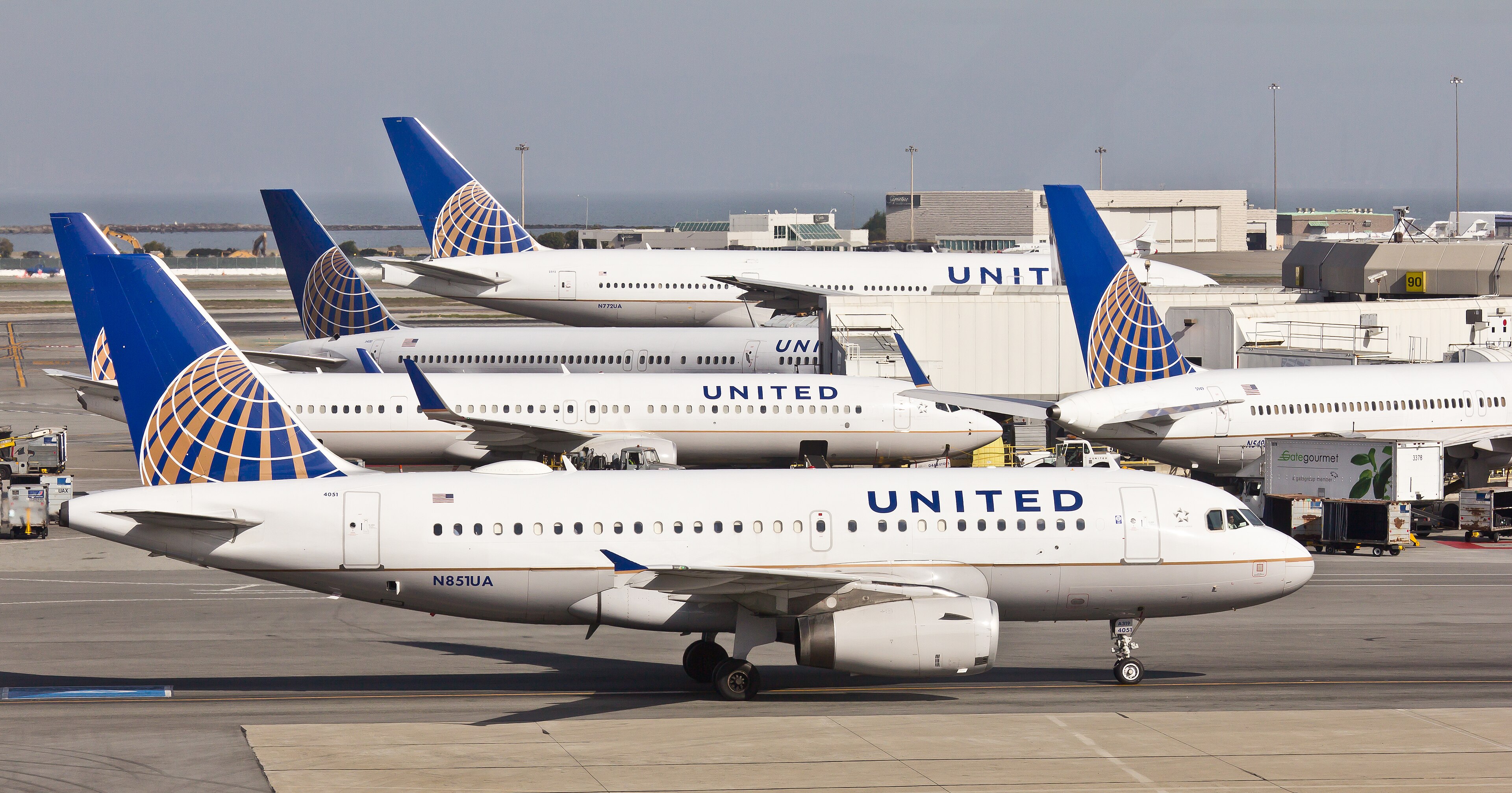
Archival photograph of United Airlines aircraft at San Francisco International Airport, January 27, 2014. Photo by Raimond Spekking / Wikimedia Commons, licensed under CC BY-SA 4.0.
Original image:
https://commons.wikimedia.org/wiki/File:United_Airlines_-_N851UA_-Airbus_A319_-_San_Francisco_International_Airport-0383.jpg

License:
https://creativecommons.org/licenses/by-sa/4.0/
The photograph is archival and does not depict the November 2026 aviation disruptions.