
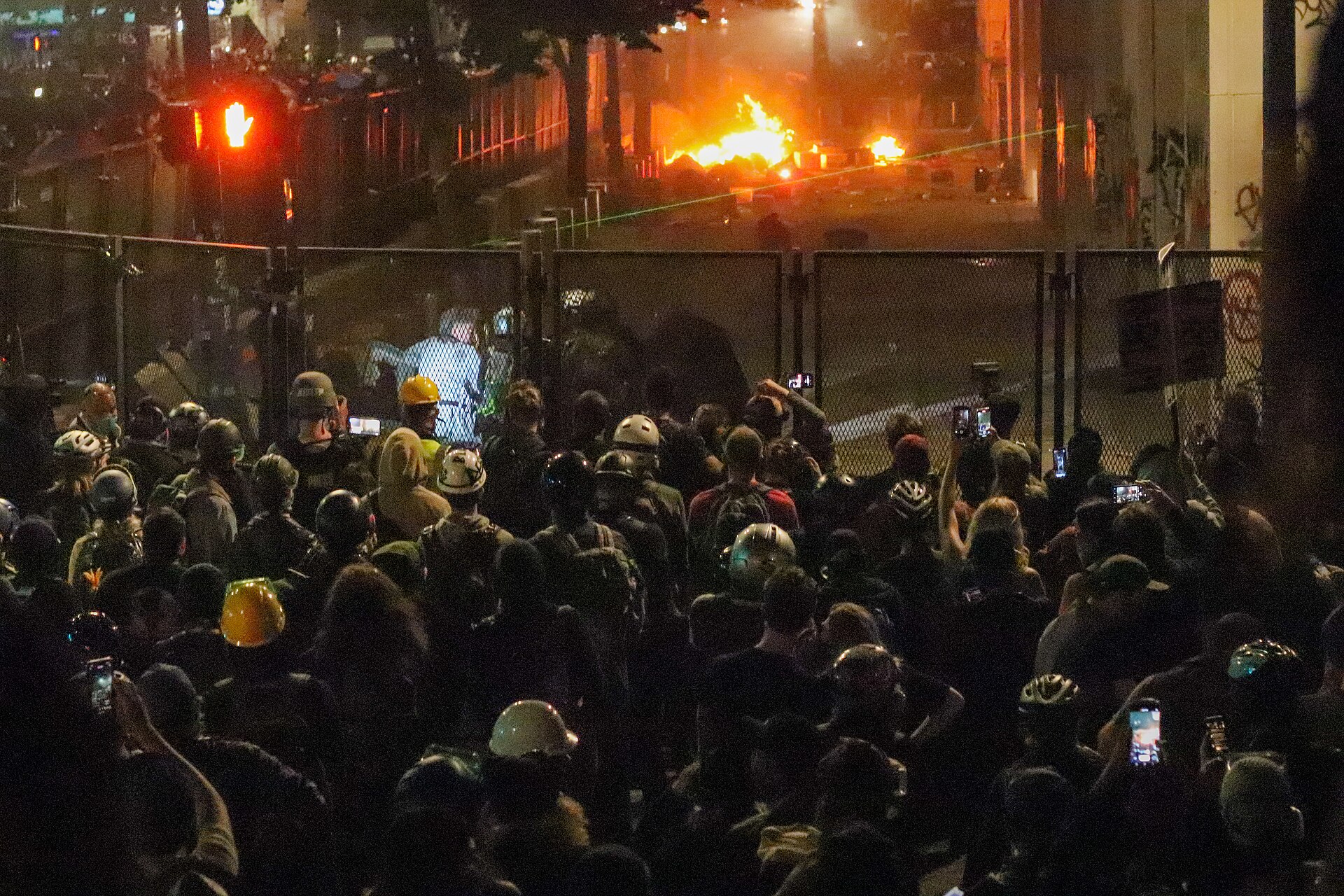
As police dispersed demonstrators on Portland’s streets, tear gas was entering cells inside the county jail. Inmates pleaded for help, but according to their lawsuit, correctional officers ignored their requests. Now, six years later, Multnomah County has agreed to a settlement worth nearly $600,000. And this is far from the only legal bill stemming from the events of 2020.
PORTLAND, Oregon | November 13, 2026 — WE PNW
The summer of 2020 became one of the most turbulent periods in Portland’s modern history. Following the killing of George Floyd, the city experienced widespread protests against police brutality and racial discrimination. Thousands of people took to the streets, confrontations erupted between demonstrators and law enforcement, and officers deployed tear gas and other crowd-control weapons.
But few people witnessing those events could have imagined that the consequences of dispersing protesters would also reach people who had never participated in the demonstrations.
They were behind bars.
On November 12, 2026, the Multnomah County Board of Commissioners unanimously approved a $594,224.88 settlement in a class-action lawsuit brought by inmates at the Multnomah County Detention Center.
The settlement was reported by KOIN 6.
The lawsuit was originally filed in November 2020 by Teresa Davis, Rashod Duhart, Robin Lundy, and other inmates who alleged that jail officials failed to protect them from chemical agents deployed by law enforcement outside the facility.
Tear Gas Entered the Cells. Inmates Pleaded for Help.
According to court documents, tear gas and smoke first entered the jail through its ventilation system on May 29, 2020, shortly after the protests began.
Over the following weeks, chemical agents repeatedly made their way inside the building.
The lawsuit describes inmates coughing, shouting, banging on cell doors, and pressing emergency call buttons in desperate attempts to get the attention of correctional officers.
According to the plaintiffs, some officers not only failed to provide assistance but also responded with hostility.
One officer allegedly told inmates to deal with the situation themselves. Another, according to the lawsuit, threatened disciplinary consequences if inmates continued using their emergency call buttons.
Attorneys described physical and psychological effects from the exposure, including skin irritation, nosebleeds, headaches, and other health problems.
The plaintiffs’ representatives argued that the situation was particularly dangerous for people with asthma and other respiratory conditions.
The crucial difference between the people on the streets and those inside the jail was that inmates could not simply leave the area when tear gas entered the building.
They were entirely dependent on jail staff for their safety.
These allegations are detailed in the federal court records in Davis v. Multnomah County.
It is important to note that the descriptions of officers’ conduct and inmates’ injuries represent allegations made by the plaintiffs, not judicial findings establishing every individual incident.
What Happened to the Protesters Themselves?
The jail settlement is only one part of a much larger story.
In the six years since the 2020 protests, Portland and federal authorities have faced a series of lawsuits filed by demonstrators, journalists, legal observers, and people injured during confrontations with law enforcement.
Some settlements have been substantially larger than the one approved for jail inmates.
$7.65 Million — Donavan LaBella
On July 11, 2020, during demonstrations near the federal courthouse in Portland, a federal law enforcement officer fired a less-lethal projectile that struck Donavan LaBella in the head.
LaBella suffered a severe traumatic brain injury that permanently changed his life.
Federal officials maintained that the officer had aimed at LaBella’s torso while responding to a tense situation.
Nevertheless, after years of litigation, the federal government reached a $7.65 million settlement.
A substantial portion of the money was intended to address LaBella’s long-term care and medical needs.
Source: Oregon Public Broadcasting, February 14, 2025.
$400,000 — Protester Using a Wheelchair
In November 2024, Portland agreed to pay $400,000 to Dustin Ferreira, a protest participant who uses a wheelchair.
Ferreira alleged that during a September 2020 demonstration, a police officer forcefully grabbed his arm, injuring his shoulder and aggravating his medical condition.
Ferreira has a disorder that makes his bones unusually fragile.
Source: OPB, November 20, 2024.
Nearly $1 Million — Journalists and Legal Observers
In March 2025, the Portland City Council approved a $938,328 settlement involving nine journalists and legal observers.
The plaintiffs alleged that police used excessive or unjustified force against them while they were documenting demonstrations and monitoring law enforcement activities.
The agreement also included provisions requiring certain protections for journalists and legal observers to remain in Portland Police Bureau policies through the end of 2028.
$250,000 Plus Legal Fees — Lawsuit Over Crowd-Control Weapons
In 2022, Portland agreed to settle a lawsuit brought by the organization Don't Shoot PDX and several protesters.
The agreement included $250,000 plus attorney fees.
It also required the city to stop using certain rubber-ball crowd-control devices.
Source: OPB, November 29, 2022.
Millions of Dollars and Years of Litigation
By November 2024, Portland’s City Attorney’s Office had confirmed that the city had paid more than $3 million in settlements related to police actions during the 2020 protests.
By March 2025, OPB reported that Portland had paid more than $4.5 million over five years in police-related settlements, with most of that money associated with people injured during the protests.
However, these figures cannot simply be added to federal settlements or payments made by Multnomah County.
The cases involved different defendants, government agencies, budgets, and legal proceedings.
Another important distinction is that not every dollar in a settlement necessarily goes directly to an injured individual. Some agreements include attorney fees and other legal expenses.
Why Did Justice Take Six Years?
Six years is a long time.
Since the summer of 2020, Portland has experienced changes in political leadership, public priorities, and the broader national conversation about policing.
But the lawsuits continued.
The jail inmates filed their case in November 2020, just months after the alleged exposure.
Over the following years, the parties disputed the legal basis of the claims, the potential liability of individual officials, and other questions central to the case.
On January 30, 2026, a federal judge dismissed some claims against individual officials but allowed a constitutional claim against Multnomah County to proceed.
Read the federal court ruling issued January 30, 2026.
That distinction matters.
The plaintiffs did not wait six years to file their lawsuit. They went to court in the same year the events occurred. It took approximately six years for the case to reach a settlement.
The settlement itself does not constitute an admission that every allegation against the county was true.
Nevertheless, the nearly $600,000 agreement demonstrates that the financial and legal consequences of the 2020 protests continue to affect local governments years after the demonstrations ended.
The Protests Ended. Their Consequences Did Not.
For some Portland residents, the summer of 2020 remains a memory of demonstrations, political debates, and confrontations in the streets.
For others, those events resulted in serious injuries, years of litigation, and prolonged efforts to obtain compensation.
Now, the list of settlements includes inmates who were inside a county jail while tear gas was being deployed outside.
Six years later, authorities are still resolving legal claims stemming from those events. And the nearly $600,000 settlement approved by Multnomah County on November 12 is another reminder of how long the road can be between an incident and its legal resolution.