
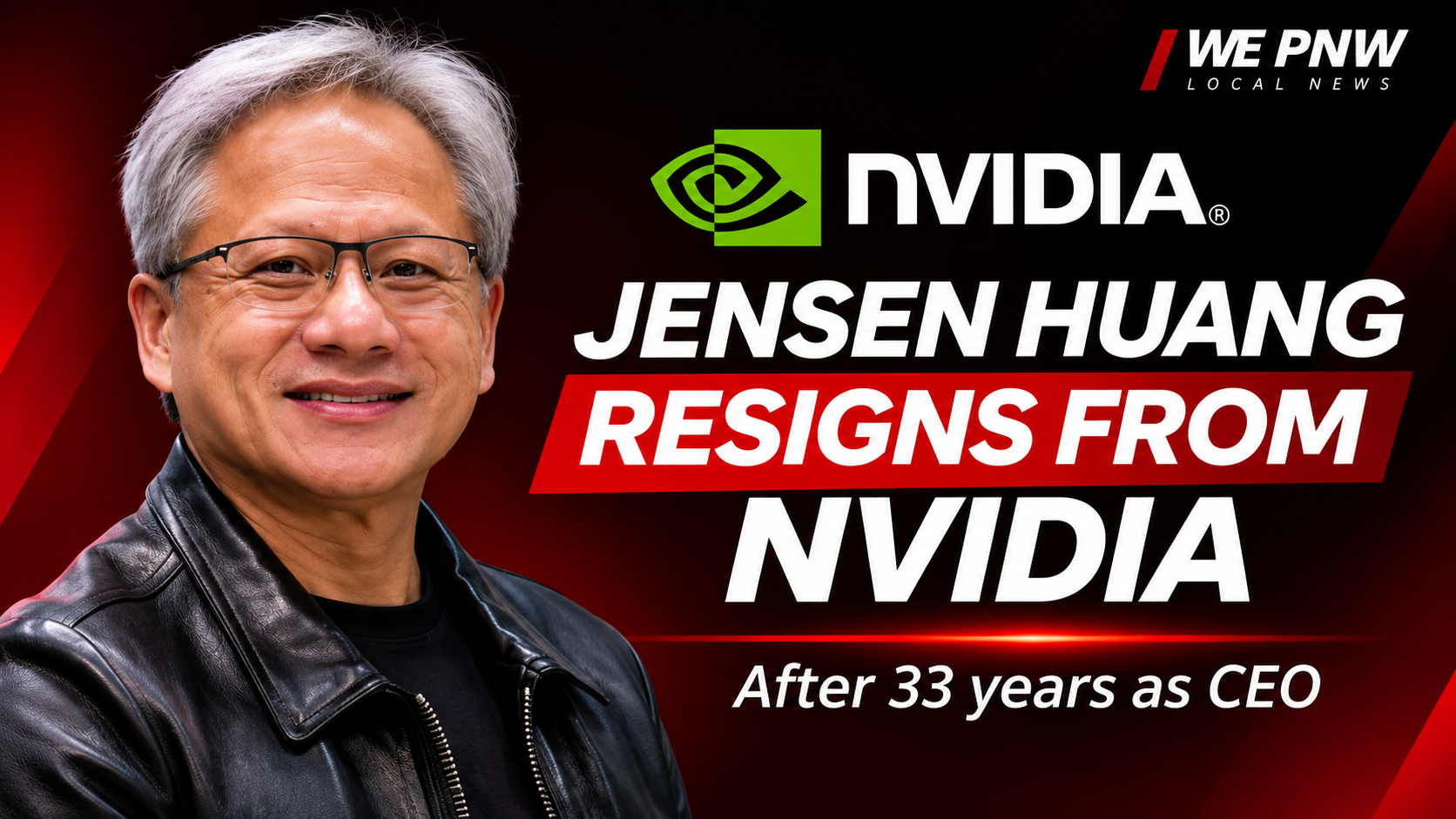
Jensen Huang Resigns From NVIDIA: How a Personal Scandal Became a U.S.–China Security Investigation
NVIDIA co-founder Jensen Huang has stepped down from the company he led for 33 years. What began with reports about his personal relationships escalated into a controversy involving corporate security, potential foreign influence, and restrictions on advanced AI chip exports to China. NVIDIA is now searching for a permanent successor as investigations continue.
UNITED STATES | November 15, 2026 — WE PNW
NVIDIA Confirms Huang's Departure
Jensen Huang, NVIDIA's co-founder and one of the most influential executives in the global artificial intelligence industry, has resigned as the company's chief executive officer.
On November 12, NVIDIA officially announced Huang's departure as president, CEO, and a member of its board of directors. According to a filing with the U.S. Securities and Exchange Commission (SEC), his resignation became effective November 11.
Colette Kress, NVIDIA's chief financial officer since 2013, has been appointed interim CEO.
Harvey Jones has assumed the role of board chairman, while the company begins searching for a permanent successor, considering both internal and external candidates.
Huang's departure marks the end of a 33-year leadership era during which NVIDIA evolved from a graphics chip manufacturer into one of the world's most important suppliers of artificial intelligence computing infrastructure.
How the Scandal Began
In early November, U.S. media outlets reported that Huang had been involved in an extramarital relationship with entrepreneur Alice Huang, who was reportedly connected to a Singapore-based AI infrastructure business.
According to those reports, U.S. intelligence officials suspected the woman of having contacts with Chinese intelligence services and potentially sharing information with Beijing.
These allegations do not constitute proof of espionage. Chinese officials have denied the accusations.
On November 8, NVIDIA published a message from Jensen Huang to employees in which he acknowledged marital infidelity and apologized to his family.
Around the same time, NVIDIA's board announced an independent investigation into reports of a possible foreign intelligence operation targeting the company's chief executive.
Additional reports later emerged concerning Huang's personal relationships, including an alleged relationship with an NVIDIA employee. These developments raised further questions about corporate policies and potential conflicts of interest.
Why a Personal Controversy Became a National Security Issue
NVIDIA occupies a central position in the global artificial intelligence industry. Its advanced processors are used to train and operate some of the world's most powerful AI systems.
The U.S. government restricts exports of certain advanced chips to China, treating access to these technologies as a matter of national security.
As a result, reports that NVIDIA's chief executive may have maintained a relationship with someone suspected of ties to foreign intelligence attracted significant attention.
Additional questions arose concerning Megaspeed International, a company associated with AI infrastructure operations in Asia.
American media reported suspicions of possible attempts to circumvent restrictions on advanced chip exports.
However, allegations, investigations, and legally established responsibility must be distinguished.
At the time of publication, there was no publicly established evidence that Huang knowingly transferred classified information to a foreign intelligence service.
NVIDIA's Response and the U.S. Government's Reaction
NVIDIA initiated an independent investigation with the assistance of outside legal counsel.
The company stated that it had no reason to believe government or corporate secrets had been compromised.
The controversy also prompted renewed scrutiny among U.S. lawmakers regarding export controls on advanced artificial intelligence chips.
President Donald Trump publicly commented on the situation surrounding Huang.
Following the resignation announcement, Trump also discussed potential leadership candidates, mentioning Tim Cook, the former CEO of Apple.
However, the responsibility for appointing NVIDIA's permanent chief executive remains with the company's board of directors.
How NVIDIA's Stock Reacted
The resignation of one of the technology industry's most recognizable leaders triggered a sharp market reaction.
According to The Guardian, NVIDIA shares fell approximately 4.3% during the November 12 trading session.
The decline erased more than $180 billion in market capitalization in a single day.
The market reaction reflected uncertainty surrounding the company's leadership transition, but it did not necessarily indicate deterioration in NVIDIA's operating or financial performance.
Who Is Leading NVIDIA Now?
Interim CEO Colette Kress is one of NVIDIA's most experienced senior executives.
She joined the company in 2013 and oversaw its financial operations during a period of extraordinary business growth.
NVIDIA's board has emphasized its commitment to maintaining operational continuity, customer relationships, and the company's long-term technology strategy.
The company is scheduled to report quarterly financial results on November 17, 2026.
That announcement will represent an important early test for NVIDIA's new leadership.
What Has Been Confirmed — and What Remains Unanswered
As of November 15, three major developments have been confirmed:
- Jensen Huang has resigned from NVIDIA's executive leadership and board of directors.
- Colette Kress has been appointed interim CEO.
- An independent investigation into the circumstances surrounding the controversy remains ongoing.
However, no final public findings have established the full extent of any alleged foreign intelligence involvement, possible information leaks, or responsibility for potential export-control violations.
NVIDIA's official announcement did not establish that Huang's resignation resulted directly from proven espionage or violations of U.S. export laws.
The significance of this story extends beyond the departure of the executive who built one of the most important companies of the AI era. It highlights how closely executive accountability, corporate security, international politics, and control over advanced technology have become intertwined.
NVIDIA now faces a new chapter as it seeks to maintain the confidence of investors, customers, and partners without the leader who served as its most recognizable public figure for more than three decades.
WE PNW | Technology, Business & World Affairs
Editor's note: Reports concerning alleged intelligence activity and possible export-control violations are presented as allegations and matters under investigation, not as facts established in court.
Sources: NVIDIA Newsroom (November 8, 10, and 12, 2026); SEC Form 8-K; Reuters; Associated Press; CBS News; The Guardian.