
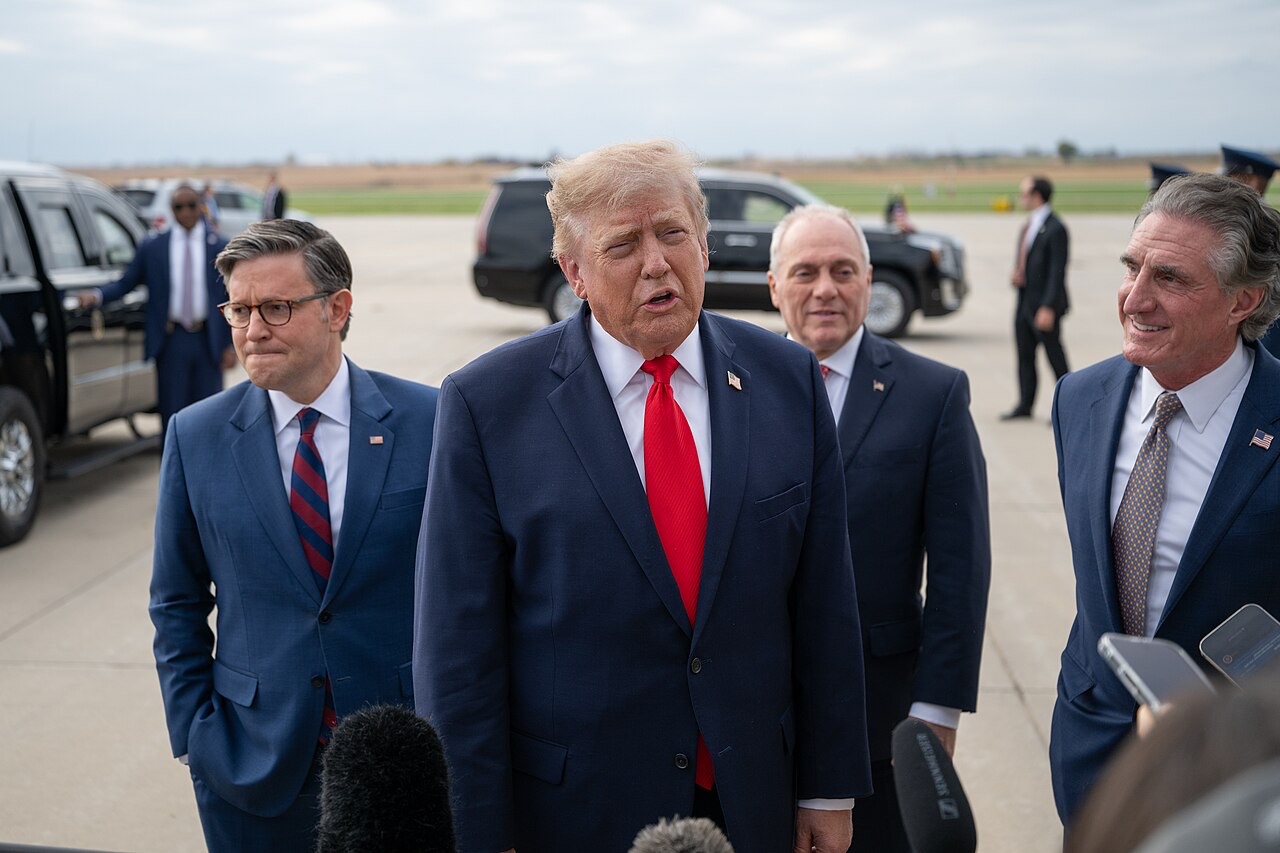
President Donald Trump says he is willing to work with Democrats to cap credit card interest rates at 10% annually. For millions of Americans, the question goes beyond politics. It could mean significant savings on the cost of carrying credit card debt.
During an interview on Fox News' Saturday in America on November 21, Trump was asked whether he would support a bipartisan effort to limit credit card interest rates. He said he would, arguing that credit card companies have made enormous profits.
The idea is not new. Trump promised to limit credit card interest rates during his 2024 presidential campaign. In January 2026, he renewed his call for a temporary 10% cap lasting one year. The proposal faced opposition from the banking industry and failed to gain sufficient support from congressional Republicans.
The political landscape may now be shifting. Following the November elections, Democrats are expected to take control of both chambers of Congress in January 2027. Senator Elizabeth Warren, who is expected to chair the Senate Banking Committee, has already expressed support for the proposal and called for lower borrowing costs.
How Much Does Credit Card Debt Really Cost?
According to figures cited by Associated Press from an August survey by the Federal Reserve Bank of New York, the median credit card interest rate is approximately 22.2% annually.
For Americans who pay their balances in full every month and avoid interest charges, that figure may have little practical significance. But for people who carry balances from month to month, the difference between today's rates and a proposed 10% limit could be substantial.
Consider someone with a $5,000 credit card balance. At an annual interest rate of 22.2%, that balance would generate approximately $92.50 in interest over one month. At 10%, the monthly interest would drop to about $41.67.
That represents a difference of roughly $51 per month, or $610 per year. For someone carrying $10,000 in credit card debt, the potential annual savings would be approximately $1,220.
These are simplified calculations assuming the balance remains unchanged. Actual interest charges depend on daily accrual, payments, outstanding balances and individual card agreements.
Federal Reserve data shows how widespread the issue has become. According to a report released by the Federal Reserve Bank of New York on November 10, Americans' total credit card debt reached $1.285 trillion by the end of September 2026. Balances increased by another $22 billion during the third quarter alone.
Total U.S. household debt, including mortgages, auto loans, student loans and other forms of borrowing, reached $19.105 trillion. For borrowers who can afford only minimum monthly payments, high interest rates mean a significant share of their money goes toward interest rather than paying down what they owe.
$100 Billion in Potential Savings — But at What Cost?
In September 2025, researchers at Vanderbilt Policy Accelerator published an analysis of the potential economic consequences of limiting credit card interest rates.
They estimated that a 10% cap could save American consumers approximately $100 billion annually in interest payments.
The researchers also acknowledged possible trade-offs. Banks might reduce rewards programs, including cashback, for some cardholders. Their economic model estimated a reduction in rewards of approximately $27 billion annually. Even after accounting for that potential loss, the projected savings from lower interest payments would remain substantial.
The researchers concluded that the credit card industry could continue operating profitably under lower interest rate limits. Banks dispute that assessment.
Financial industry representatives argue that a 10% cap could make lending to certain customers less attractive, particularly people with lower credit scores or a higher risk of default. They warn of reduced credit limits, stricter approval requirements, fewer rewards and the possible closure of some accounts.
Supporters reject the industry's warnings, arguing that financial institutions can reduce borrowing costs without significantly restricting access to credit. How banks would actually respond to a new law remains uncertain.
An Oregon Senator Already Supports a 10% Cap
For Oregon residents, the proposal has a direct political connection.
On February 4, 2025, Senators Bernie Sanders and Josh Hawley introduced S. 381, the 10 Percent Credit Card Interest Rate Cap Act. The bill would set a maximum annual interest rate of 10% on credit cards, including certain finance charges covered by the legislation.
Oregon Democratic Senator Jeff Merkley subsequently joined the measure as a co-sponsor. His participation means the proposal already has support from a senator representing the Pacific Northwest.
There is an important difference between the existing bill and Trump's earlier proposal: the Sanders-Hawley legislation provides for the cap to expire on January 1, 2031, while Trump's previous proposal called for a one-year restriction.
As of November 21, S. 381 remained before the Senate Banking Committee. Congress had not approved it.
When Could Americans Actually See Lower Rates?
Despite Trump's latest statement, existing credit card interest rates have not changed. A nationwide cap would require legislation establishing the restrictions, how they would be implemented and when they would take effect.
One of the biggest unanswered questions concerns existing balances. If the proposed cap applies to debt Americans already owe, borrowers could see savings on outstanding balances after the law takes effect. If the restrictions apply only to future transactions, the effect would be different. No final decision has been announced.
For now, credit card holders must continue following their existing agreements. A presidential statement does not automatically reduce interest charges or change obligations to lenders.
Still, Trump's remarks carry political significance beyond a single television interview. A Republican president has expressed a willingness to work with Democrats on a consumer-finance proposal that previously failed to gain sufficient support within his party. Whether that cooperation produces a federal law remains to be seen.
Roman Tretiakov | WE PNW