A hunger strike at an immigration detention facility in Folkston, Georgia, has reportedly grown to approximately 500 participants, raising new questions about detention conditions and the treatment of people seeking asylum in the United States.
The estimate comes from family members, advocates and a legal representative cited in an October 12 investigation by The Current, an independent news organization covering Coastal Georgia.
Many of the participants reportedly came to the United States seeking protection from persecution. Some say they have spent months or even years waiting for their cases to move forward.
How the protest grew
In September, 14 Russian-speaking detainees issued a collective letter describing concerns about conditions at Folkston.
Their complaints became part of a broader protest.
Samantha Hamilton, a senior litigation staff attorney with Asian Americans Advancing Justice Atlanta, told The Current that approximately 372 people were participating in the hunger strike in the F building and K5 housing unit as of October 8.
An estimated 150 additional detainees were participating in other areas, she said.
That places the reported total at more than 500.
However, these figures were assembled through communications involving relatives, activists and detainees. ICE has not publicly confirmed the estimate as of October 14. The exact number of people continuing the strike on subsequent days is also unclear.
An open letter signed by 45 detainees described plans for a wider protest ahead of an anticipated October 6 facility inspection.
What detainees are protesting
The complaints focus on two broad issues: conditions inside the facility and the length of immigration detention.
Participants have raised concerns about drinking water, food, medical treatment, sleeping conditions and delays in their legal proceedings.
Some say they have been detained for extended periods despite seeking asylum rather than serving criminal sentences.
Asylum requests are legally permitted under U.S. law, but the circumstances under which an applicant may be detained or released depend on immigration law and individual cases. Filing an asylum claim does not automatically guarantee release.
The detainees also expressed concerns that conditions presented during official inspections might not reflect their everyday experience.
These allegations remain subject to verification. WE PNW has not independently obtained medical records or inspection findings establishing every condition described by participants.
The families waiting outside
For families, the dispute is not abstract.
The Current documented the account of Polina Chertushkina and her husband, Andrei Gerdiukov, a Russian asylum seeker.
According to Polina, the couple entered the United States in February 2024, applied for asylum and later settled in New York while their immigration cases were pending.
They were subsequently detained in Florida, and Gerdiukov was transferred to a Georgia detention facility.
Polina said her husband was placed in solitary confinement after participating in the protest.
WE PNW has not independently verified the reason for his placement in segregation or obtained official records confirming her account.
His family's story illustrates the uncertainty faced by relatives who remain outside detention facilities while waiting for legal decisions.
What is Folkston?
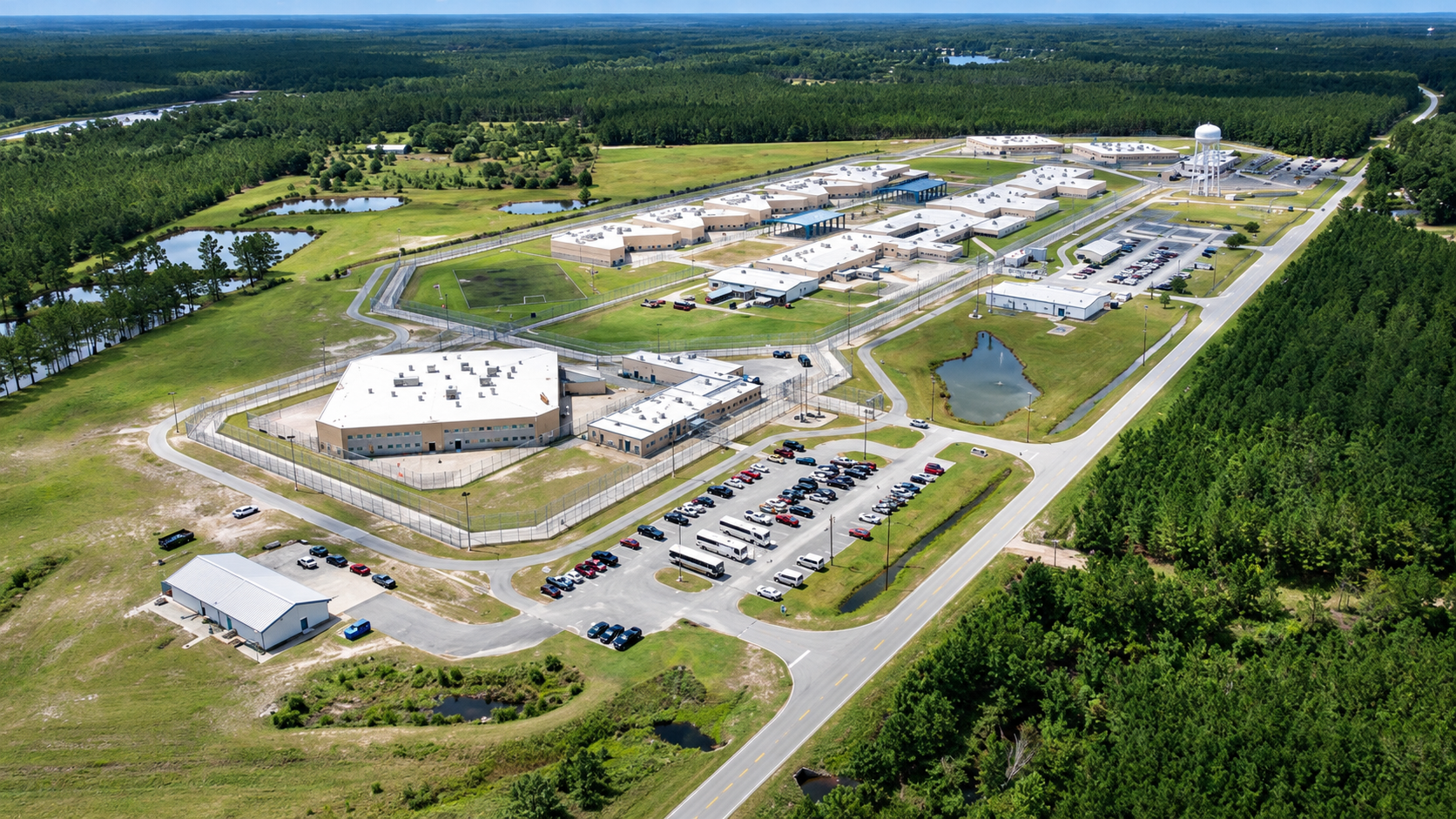
The Folkston ICE Processing Center is in Charlton County, southeastern Georgia.
The facility is operated by private prison contractor The GEO Group under an arrangement with federal immigration authorities.
The Current reported that the federal government awarded a contract worth approximately $47 million connected to an expansion that would increase the facility's capacity to 3,000 beds.
That expansion could make Folkston the largest permanent ICE detention facility in the United States.
The facility has faced scrutiny before. The Current has previously investigated the 2024 death of detainee Jaspal Singh, citing an ICE review that identified serious failures in the medical care he received.
That earlier case does not establish the truth of every allegation now being raised. It does, however, form part of the facility's documented history.
Responses from ICE and GEO Group
The Current contacted the facility operator and federal immigration authorities about the current protest.
GEO Group declined to address the allegations directly and referred questions to ICE.
ICE had not provided a response to the publication by the time its October 12 report was published.
The lack of a response does not independently establish misconduct, but it leaves the specific allegations without a publicly available agency explanation in that report.
What remains unknown
The latest detailed estimates of participation cited by The Current were gathered as of October 8.
As of October 14, WE PNW has not independently confirmed the current number of hunger strikers, their medical status, or any subsequent action taken by the facility following the complaints.
What is clear is that the story has grown beyond the original letter from 14 Russian-speaking detainees.
It now involves hundreds of reported participants, families seeking answers, legal advocates and renewed scrutiny of a detention facility preparing for major expansion.
For the detainees and their relatives, the central question remains: when will their complaints and immigration cases receive meaningful review?
WE PNW will continue following court records, official responses and additional reporting.