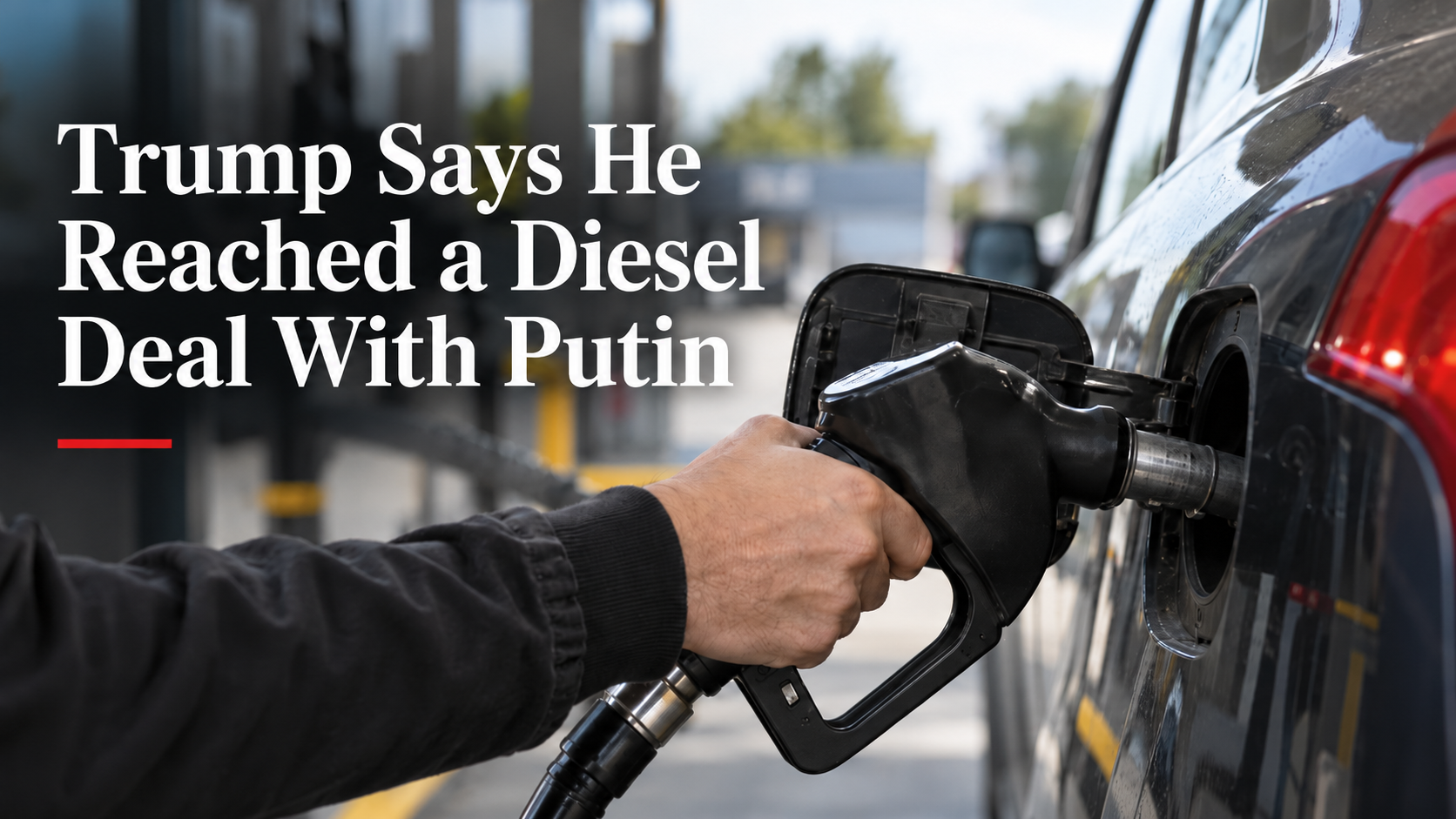
President Donald Trump said he had reached an agreement with Vladimir Putin on supplies of Russian diesel fuel to the United States and the global market.
According to Reuters, Trump said that after speaking with Putin, Russia agreed to immediately supply more than 300,000 tons of diesel to the American and global market. Reuters also reported that additional volumes could include 500,000 tons in November and 1 million tons after that. Trump described the goal as lowering diesel prices, which have risen sharply amid conflicts around Ukraine and Iran.
AP described the announcement as a sharp reversal after years of U.S. pressure on Moscow over Russia’s war against Ukraine. The arrangement became possible amid a temporary easing of sanctions restrictions on Russian diesel shipments.
At first glance, this is an energy story. High diesel prices affect truckers, farmers, businesses and consumers. Inside the United States, this is a real economic problem.
But the political context makes the story much broader.
The United States is also trying to take part in talks aimed at ending the war in Ukraine. Kyiv insists that any negotiations with Russia must be accompanied by pressure on Moscow, not economic relief. Axios reports that Ukrainian President Volodymyr Zelensky criticized Trump’s diesel agreement with Putin and called it unfair to Ukraine.
This is where the central question arises: if Washington says pressure on Russia is necessary, how does that fit with an agreement to bring Russian diesel into the American market?
For the Trump administration, the answer may be simple: fuel prices inside the United States have become too high, and they need to be brought down. For Ukraine, the question looks different: is Moscow receiving a new economic and political resource at the very moment when it is supposed to be pressured into negotiations?
There is another question as well.
If the conflicts around Ukraine and Iran became part of the reason for the global fuel crisis, and Russia has maintained close ties with Iran, is Moscow now gaining a favorable position as a supplier of the solution to a crisis that increased America’s need for additional diesel supplies?
There is no direct evidence from public statements that this was exactly Putin’s goal. But the political effect could be that Russia, which was supposed to be constrained by sanctions and pressure, is again becoming a necessary counterpart for Washington — not only on the war, but also on the economy.
Reuters notes that analysts doubt whether the stated volume of Russian diesel can significantly lower prices in the United States. The announcement may therefore carry symbolic as well as economic weight.
Trump’s statement concerns planned supplies; it does not establish that the fuel has already reached U.S. buyers.
In the end, the question is no longer only about the price of diesel. It is how this new energy arrangement with Moscow fits with the stated goal of ending the war in Ukraine — and whether Russia is turning from an object of pressure back into a party Washington feels compelled to negotiate with.